
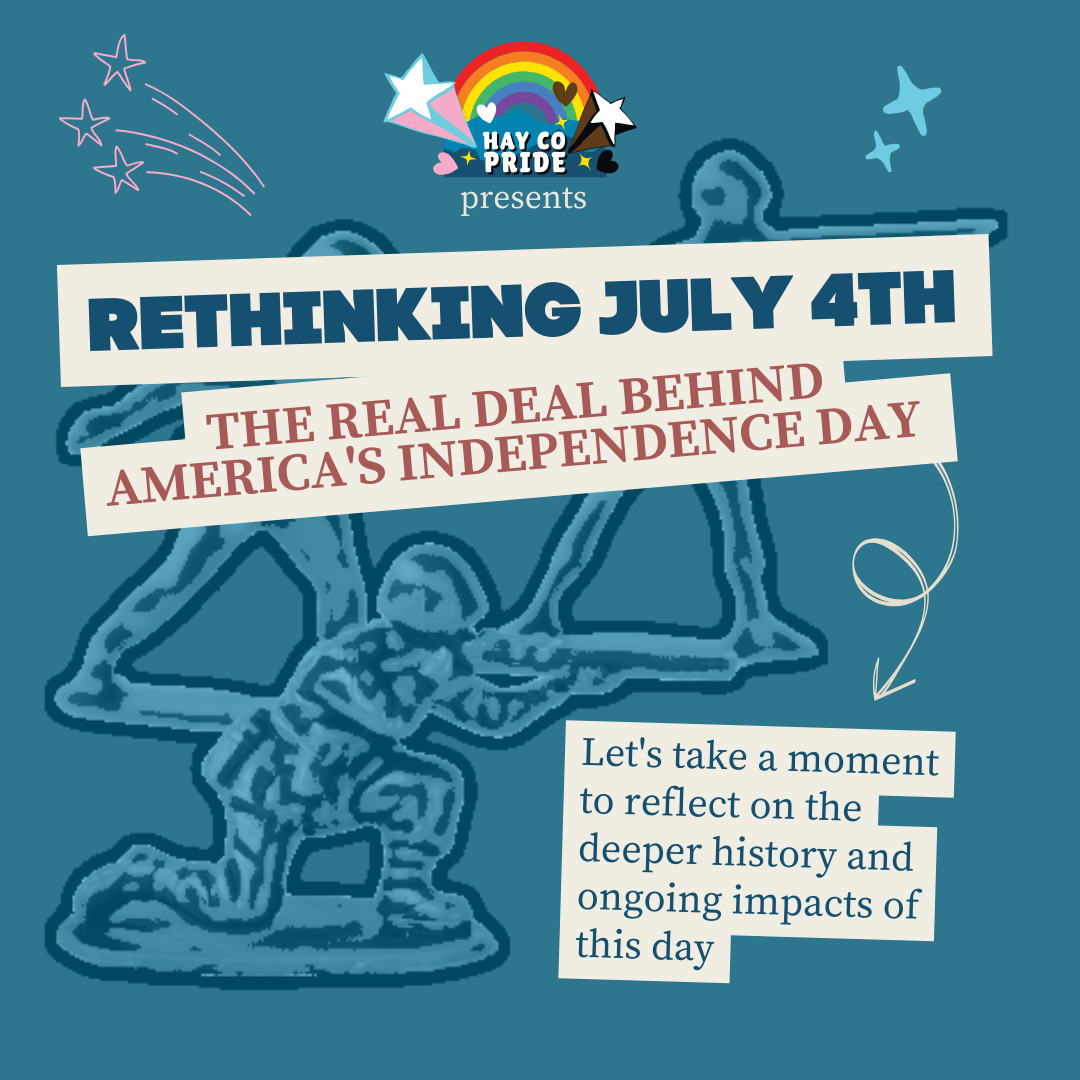
the real deal behind america’s independence day
It’s impossible to miss when the July 4th rolls around: everybody’s timeline fills up with BBQs, fireworks, and everybody rocking those red, white, and blue #OOTD outfits. It’s supposed to be a day to celebrate America’s independence, but let’s be real – the story behind this day (and our so-called “independence”) is way more complicated than just fireworks and freedom. If we dig a little deeper, we’ll find some pretty harsh truths about colonialism, capitalism, and how they still impact marginalized communities today: as in, most of us are still fighting for our own liberation.
The Dark Side of Colonialism
When we talk about America’s independence, we usually hear about how the colonists broke free from British rule. But what’s often left out is the brutal reality of colonialism. European settlers didn’t “discover” America – they violently took over land, displaced Indigenous peoples, and committed acts of gen*cide. Celebrating July 4th without acknowledging these historical facts, well… that is just ignoring the elephant in the room while celebrating on mass graves. What’s worse is that the mass graves are still being filled with bodies from an active gen*cide being committed in the name of settler colonialism while we celebrate.1

European settlers forcibly took land, resulting in the displacement, cultural eradication, and genocide of Native American communities. This violent history is glossed over in traditional Independence Day celebrations. The communities that are Indigenous to Turtle Island have faced centuries of brutality and oppression that continues into today. From poverty to healthcare disparities, the effects of colonialism are still very much alive. According to the U.S. Commission on Civil Rights, Indigenous communities face some of the highest rates of poverty and health issues in the country; meanwhile, our federal government continues to break the promises that were made to invest in reconciliation with the communities that were harmed in the forced establishment of this country.2
the price of capitalism
The American Revolution was as much about economic freedom as it was about political independence. The colonies wanted to escape British economic control and create a capitalist system. Fast forward to today, and capitalism has led to some serious wealth gaps and systemic injustices.
Take the hills that we call home right here in Appalachia, for example. This region is rich in resources but has been exploited by industries for centuries. The locals, however, haven’t seen much of the wealth generated from their land. Instead, we’ve been left with environmental damage and poverty. We know first-hand what has been confirmed by the Appalachian Regional Commission in their reports highlighting our region’s ongoing struggling with high poverty rates and low access to healthcare.3
For the working class in general, the Fourth of July can be a reminder of the disparities in a capitalist society. While thousands, even millions, of dollars are spent on explosives for us to gaze at for one night, too many of us are struggling to afford the roof over our heads. The idea that hard work equals success is a nice thought, but the reality is that many people face systemic barriers that prevent them from getting ahead. Stagnant wages, job insecurity, and inadequate social safety nets are everyday issues for many Americans, especially Appalachian Americans and those at the intersections of various marginalized identity groups.

LGBTQIA+ Communities and the Fight for Equality
The struggle for recognition and rights isn’t just historical; it’s ongoing for LGBTQIA+ folks and plenty of other folks from marginalized communities. Despite recent progress, the fight for full equality and acceptance continues — this almost feels more true in 2024 than it has in recent years, as we backslide on the rights of LGBTQIA+ in legislation and the courts. July 4th is certainly a mixed bag for LGBTQIA+ individuals who still face discrimination and marginalization.

Historically, LGBTQIA+ people have been criminalized and ostracized. The Stonewall Riots in 1969 were a turning point, but even today, the community faces significant challenges. According to the Human Rights Campaign, violence against transgender and gender non-conforming people, particularly Black and Brown individuals, remains alarmingly high.4 More legislative attacks on our rights, representation, healthcare, and education are coming down the pipeline as we speak. President Joe Biden’s administration is currently under fire for their recent about-face on the right to medical privacy and access to care for Trans folks.5 As we celebrate the nation’s independence, it’s crucial to remember and honor the resilience of the LGBTQIA+ community.
A Call for Inclusive Reflection
This July 4th, let’s celebrate with a dose of critical thinking. America’s history is complex, and the impacts of colonialism, capitalism, and systemic discrimination are still felt today. By acknowledging these realities, we can work towards a more just and inclusive society.
For working-class Appalachians, Indigenous communities, LGBTQIA+ individuals, Black folks, and other marginalized groups, the promise of freedom and independence is still a work in progress. This “holiday,” let’s amplify their voices and commit to actions that promote justice and equality for all.


As Frederick Douglass once asked, “What, to the American slave, is your Fourth of July?” It’s a powerful reminder to look at our history honestly and strive for a future where freedom, liberation, and justice are truly for everyone.
Take Action towards Liberation
You’re invited to take your reflection a step further and take action towards liberation with Haywood County Pride this 4th of July. You can sign up to get involved with our work (including our upcoming Queer Culture Celebration in October!) by filling out this form. You can also spread the word to promote inclusive reflection and start a meaningful conversation around this Summer Holiday.
2. BROKEN PROMISES: Continuing Federal Funding Shortfall for Native America
3. The Appalachian Region: A Data Overview from the 2018-2022 American Community Survey Chartbook
5. The White House Just Said What Anti-Trans Conservatives Have Been Longing For
You must be logged in to post a comment.